
Ovens and Furnaces





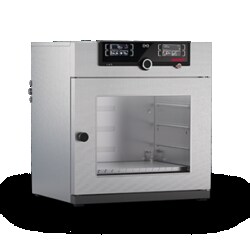
Memmert Vacuum Oven Cool VO 101 cool, 230 Volt, 50/60 Hz., Temperature Range +5C to 90C
Memmert Vacuum Oven Cool VO 101 cool, 230 Volt, 50/60 Hz., Temperature Range +5C to 90C

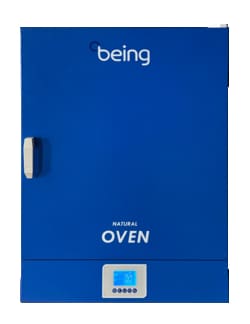
Being Scientific EON-90 - 3.9 cu ft (96L),Ambient+18 ℉ - 392 ℉ ,Ambient+10℃ - 200℃
The EON Forced-air Convection Drying Oven series distributes heat evenly inside the chamber with an integrated fan. This is ideal for drying protocols with very tight temperature requirements. The BEING E-series professional PID controller has a 3.1-inch easy-to-read, real-time LCD display to select the various fixed-value program functions with all the parameters on a single screen, providing quick and easy setting of temperature, time, and other parameters — and convenient operation. The doors are engineered with airtight sealing and inner chambers are designed with corrosion resistant stainless steel. Safety alarms are installed for – overtemperature, over current protection, and temperature deviation. These ovens provide excellent temperature stability and reproducibility for all your desired application needs ensuring maximum efficiency, safety, and ease of use.
Enterprise Technology Solutions Solo Transporter Bottom Case,w/Wheels,26"x1-3/4"x20-1/2",BK
Lightweight and durable, the Pro Transporter 128 Rolling Travel/Luggage Bottom Case transforms moving goods and products. Whether used displaying at a tradeshow, catering an event or shipping across the country, this case is effortless to stack, roll through an airport and fully collapsible for easy storage. Wire-frame panels remove for easy collapse to take a bottom and top case (not included) from 38" high to 10" high. Bottom case collapses to 6-1/2". Align and secure multiple cases with top-to-bottom buckle system. Guard your contents with lockable zippers. Bottom case is equipped with 360-degree, easy-glide wheels to effortlessly move heavy loads. Molded, hard-sided lid is armored for bumps. High capacity of 128 liters (33.8 gallons) means fewer trips to pack and transfer products. Case also complies with airport check-in and features corner bumper guards, a full-panel zipper compartment, built-in shipping window, easy-access ID holder and reflective safety strips.
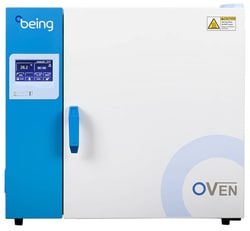
Being Scientific BON-115T - 4.2 cu ft (115 Liters)Temperature Range:Amb+10°C - 300°C .
The BON Natural Convection Drying Oven series offers low air turbulences for gentle drying and heating. This is ideal for sterilization, powder drying and high temperature storage. The 4.3-inch touchscreen controller provides fast, accurate, and uniform heat displacement. Users can preset 8 periods and 8 steps for a total of 64 programs. Temperature and time can be set and programmed at the same time. The doors are engineered with airtight sealing and inner chambers are designed with corrosion resistant stainless steel. Safety alarms are installed for – overtemperature, over current protection, and temperature deviation. These ovens provide excellent temperature stability and reproducibility for all your desired application needs ensuring maximum efficiency, safety, and ease of use.

Chemglass Life Sciences 4.5 Cu. Ft. Oven, Vacuum, 120V

The Vacuum ovens are durably constructed with seamless welds and strong bracing. All of the vacuum ovens are built with a stainless steel chamber for exceptional durability. Ovens incorporate solid brass vacuum valves with PTFE seats to prevent leaks. The double plenum design exceeds CE safety requirements resulting in a cool outer surface. The doors on these units have positive latch handles with spring-loaded glass to facilitate a good vacuum seal without hinge binds that shorten the gasket life. A selection of gaskets (for specific applications) and a small footprint increase the versatility of these ovens. The unique cross-flow ventilation forces inert gas to fill the entire chamber. Users can choose from 3/8 inch orifices or a KF25 fitting to withstand heavy use, minimize draw-down time and achieve low vacuum levels. We offer a full line of gaskets to suit applications involving high temperatures, acids, or solvents. Ovens have a 24 month limited warranty.

Cole-Parmer® OVV-400 Series Programmable Vacuum Ovens
Easily manage up to eight programs with multiple steps each. -Stainless steel inner chamber resists corrosion. -Rounded inner chamber corners offer easy cleaning. -Built-in alarm alerts when oven shuts down. -Able to heat samples up to 392°F (200°C)
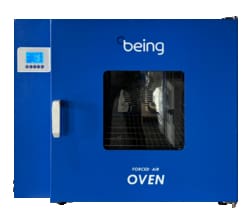
Being Scientific EOF-50 - 1.8 cu ft (50L),Ambient+18 ℉ - 482 ℉ ,Ambient+10℃ - 250℃
The EOF Forced-air Convection Drying Oven series distributes heat evenly inside the chamber with an integrated fan. This is ideal for drying protocols with very tight temperature requirements. The BEING E-series professional PID controller has a 3.1-inch easy-to-read, real-time LCD display to select the various fixed-value program functions with all the parameters on a single screen, providing quick and easy setting of temperature, time, and other parameters — and convenient operation. The doors are engineered with airtight sealing and inner chambers are designed with corrosion resistant stainless steel. Safety alarms are installed for – overtemperature, over current protection, and temperature deviation. These ovens provide excellent temperature stability and reproducibility for all your desired application needs ensuring maximum efficiency, safety, and ease of use.
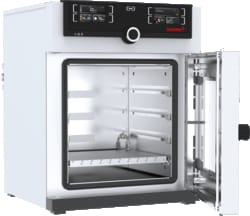
Memmert Vacuum Oven Cool VO 49 cool, 230 Volt, 50/60 Hz., Temperature Range +5C to 90C
Memmert Vacuum Oven Cool VO 49 cool, 230 Volt, 50/60 Hz., Temperature Range +5C to 90C

Electron Microscopy Sciences Vacuum Oven Model 3606, 240 V, 8"W x 8"H x 12"D chamber, 0.44 cu. ft (12.5L) Capacity
Top-mounted independent evacuation and venting vacuum fittings.
Chamber: 8"W x 8"H x 12"D
Capacity: 0.44 cu. ft (12.5L)
Thermometer: Dial